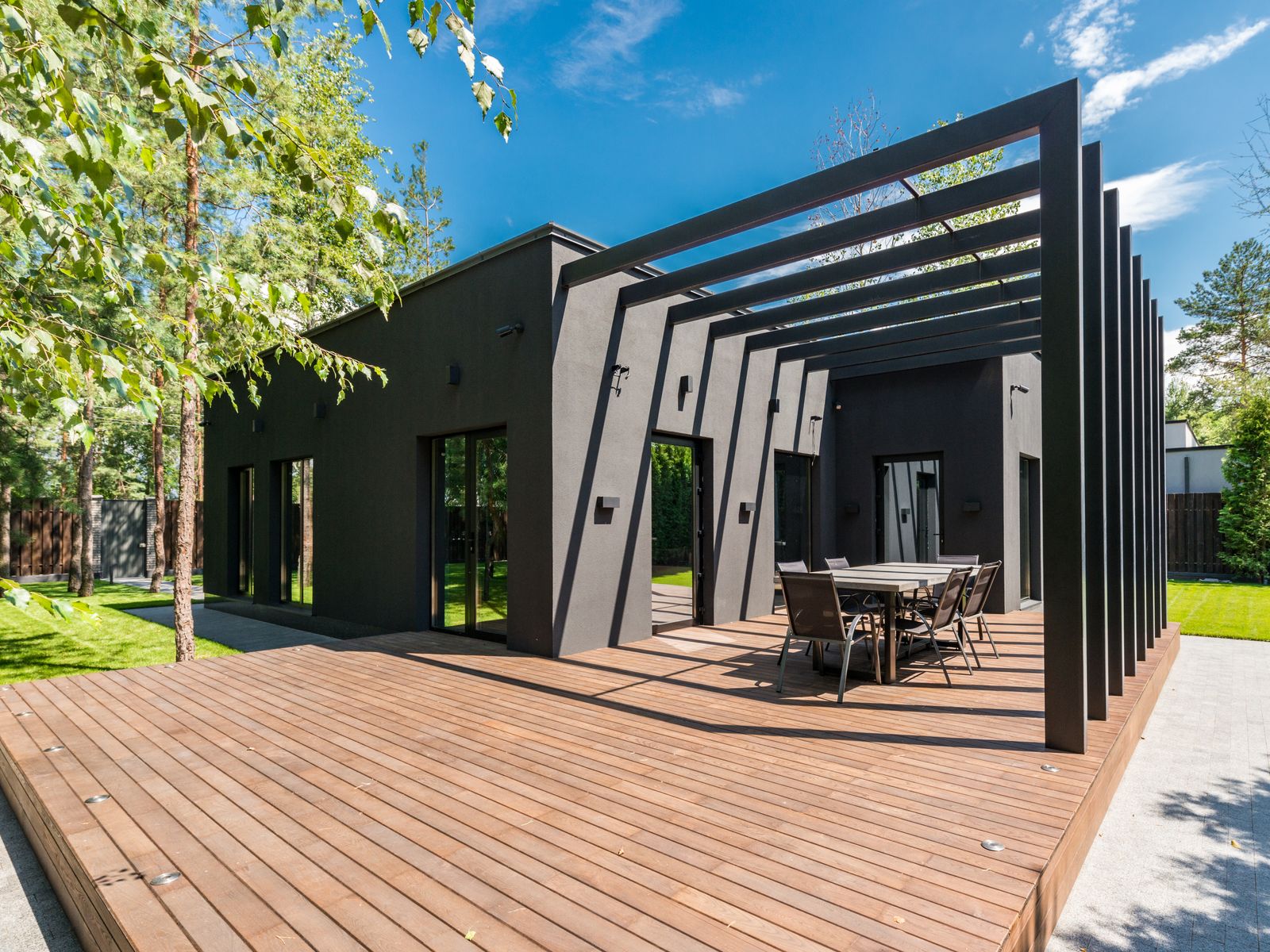
A pressure-treated deck built properly should give fifteen to twenty years here. Most that fail early fail for one of three reasons, and none is the timber.
The ledger, first
Where the deck meets the house. Without flashing, water runs behind it and sits against the framing — rotting both the ledger and the house wall. It is the most common cause of failure and the least visible.
Then the footings
Posts set too shallow move with the clay through wet and dry seasons. That shows up as a deck that feels slightly springy long before anything looks wrong.

Then standing water
Boards laid tight leave nowhere for water to go. Debris packs the gaps, holds moisture against the timber, and the boards rot from underneath while the top still looks fine.
What ages fastest
Stairs. They take every footfall concentrated on a small area and they catch rain from two directions. Expect to replace treads well before decking.

What extends it
Keeping the gaps clear, staining every two or three years, and having someone look underneath occasionally. Deck staining covers the routine part. Finished work is on our Facebook page.