Cleaning, stripping and re-coating for wood decks that have gone grey, gone patchy, or stopped shedding water.
Georgia is hard on exterior wood. Summer sun breaks down the surface fibres, humidity keeps boards damp for longer than they should be, and afternoon storms soak a deck that has not dried out from the last one. A deck here weathers faster than the same deck would in a drier state.
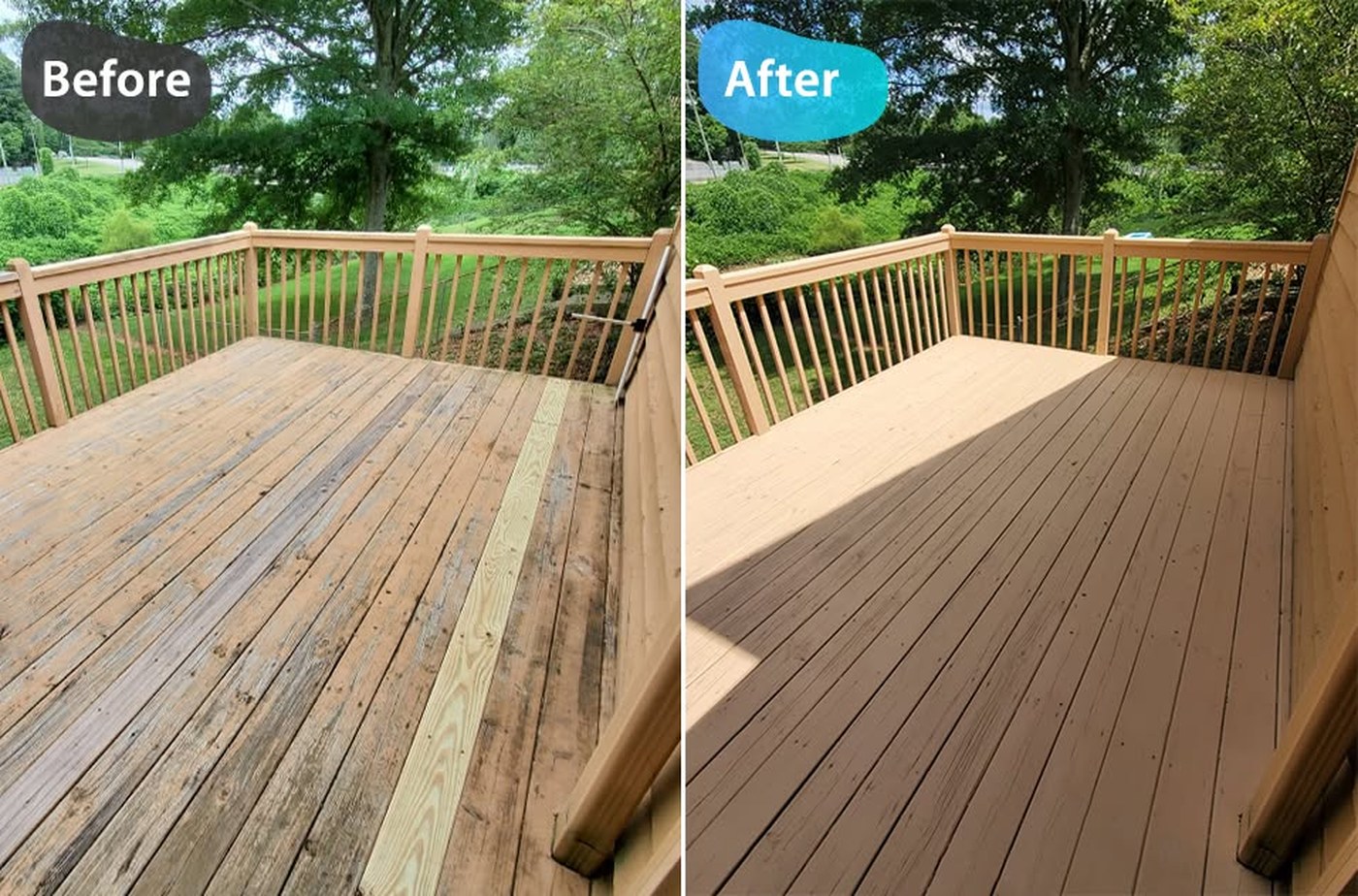
The good news is that grey wood is almost never dead wood. Silvering is surface damage — the fibres a few tenths of a millimetre down are usually sound. Clean that layer off and the colour underneath is still there.
When a deck needs re-coating
Water soaks in instead of beading on the surface
The boards have gone silver or grey
The old finish is peeling or flaking in patches
The colour has faded unevenly, worst where the sun hits
The surface feels rough or fuzzy underfoot
The bead test is the quick one. Pour a cup of water on the deck. If it beads and sits, the finish is still working. If it darkens the wood within a few seconds, the wood is drinking, and that is when rot gets its opening.
How it runs
- 01
Assess
We check the boards, the fasteners and the structure, and tell you if anything needs repair before coating.
- 02
Clean or strip
Cleaning for weathered bare wood; stripping where an old film finish is failing. A coating applied over a failing one fails with it.
- 03
Repairs
Loose or damaged boards replaced, protruding fasteners dealt with.
- 04
Prepare the surface
Sanding or brightening so the new coat penetrates evenly rather than sitting on top.
- 05
Stain
Applied in suitable weather. Heat and moisture both affect how a stain cures.
Stain or paint?
Stain penetrates the wood and wears by fading, so a re-coat means cleaning and applying more. Paint forms a film on top, hides the grain completely, and wears by peeling — which means the next job is scraping and sanding, not just re-coating. On a horizontal surface that holds water and takes direct sun, that difference matters. For decks we recommend stain in most cases. Rails and porch trim are a different conversation.
Common questions
How often does a deck need staining in Georgia?
Most decks here need re-coating every two to three years. South and west-facing decks, and anything in full sun with no tree cover, sit at the shorter end. Shaded decks last longer but pick up more mildew.
Can a grey deck be brought back?
Usually yes. Silvering is surface-level. Cleaning and sanding takes it back to sound wood, and the colour returns with the new coat. A board that is soft when you press it is a different matter — that one gets replaced.
Can you stain in summer?
Yes, with care about timing. Stain applied to a hot board in direct sun dries before it penetrates, which is how you get a blotchy finish that fails early. Working around the weather is part of the job.


Questions homeowners ask