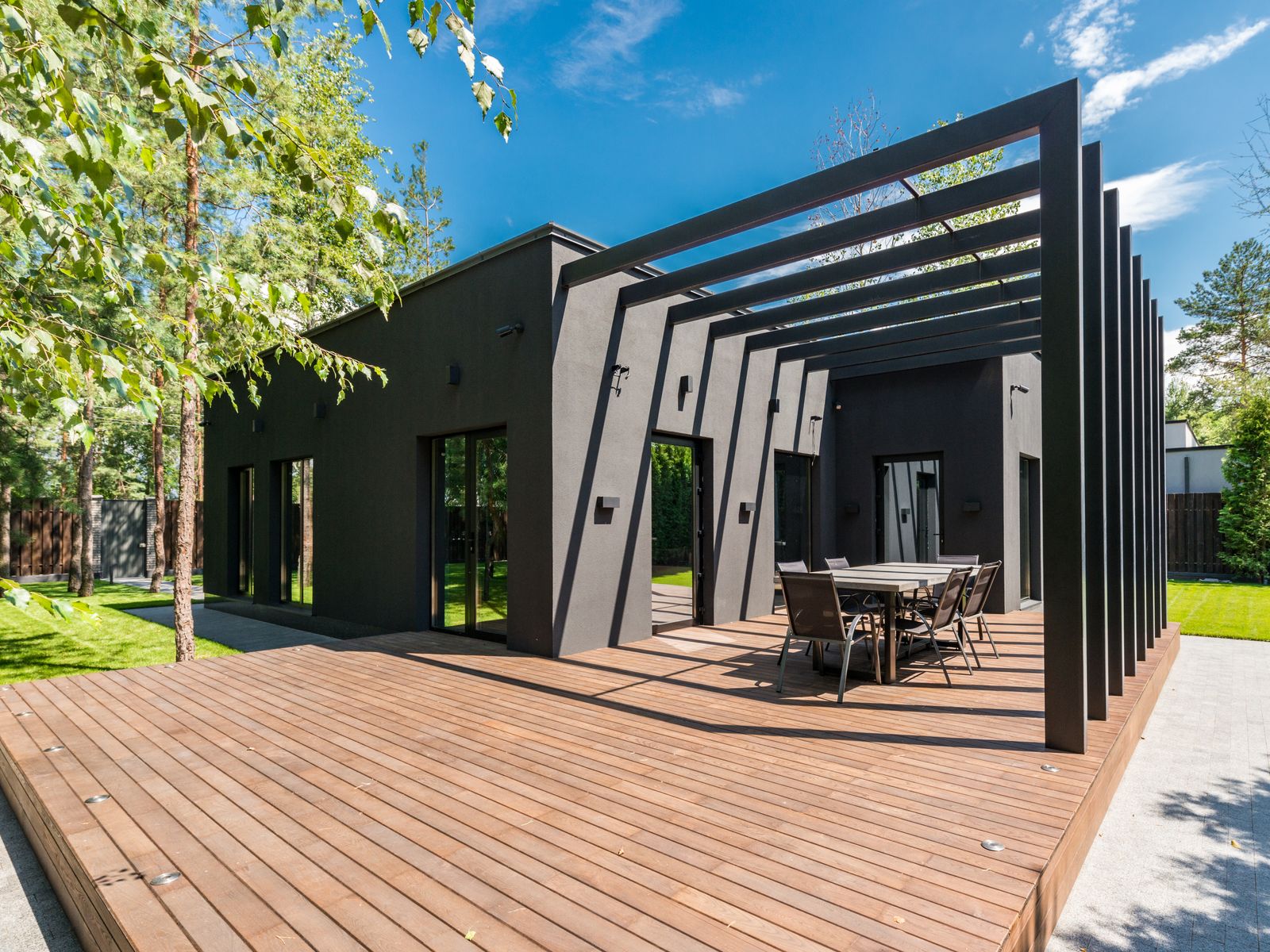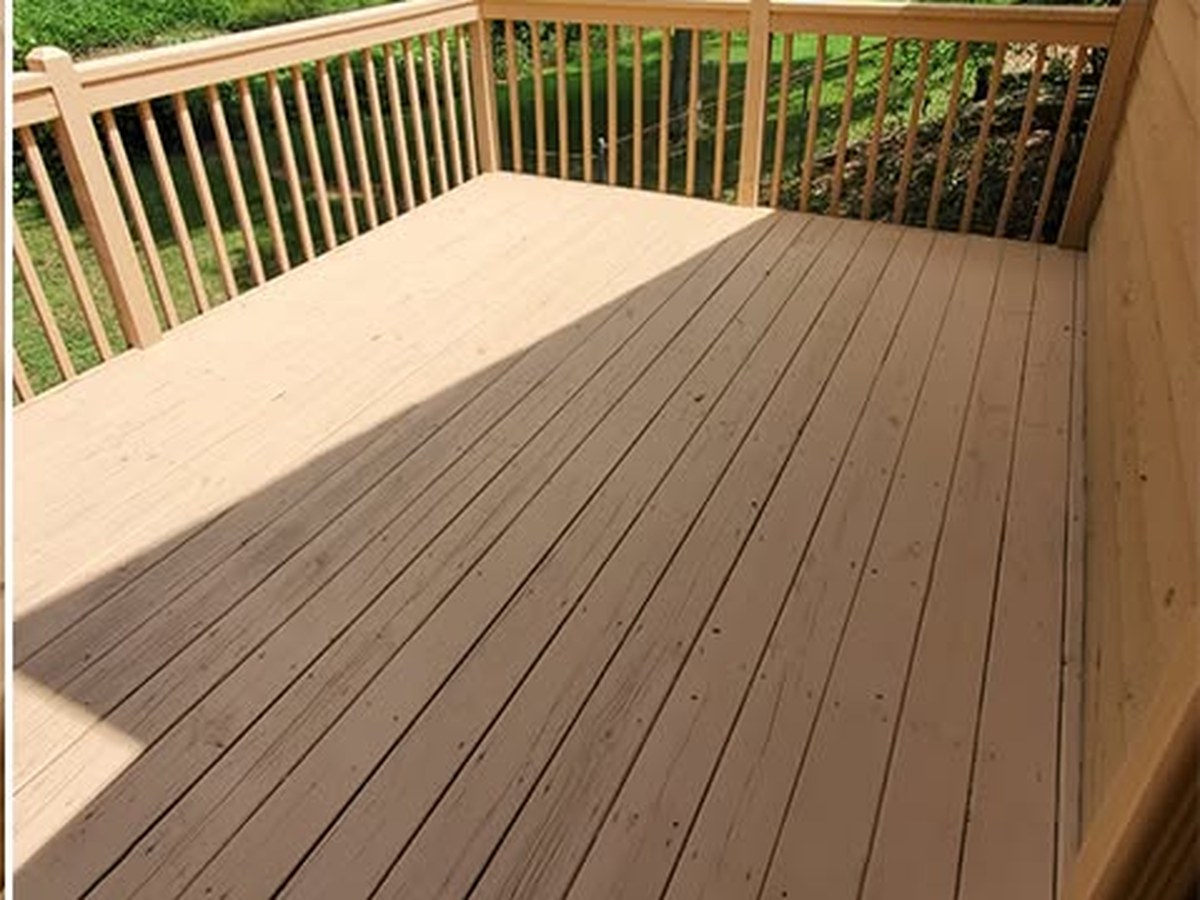
How often you stain a deck in Georgia depends less on the calendar than on the deck. Most wood decks in Georgia need re-coating every two to three years. But the calendar is the wrong thing to go by — the deck tells you itself, and there is a test that takes thirty seconds.
The water test — stain a deck in Georgia
Pour a cup of water onto the deck boards, somewhere out in the open rather than under a table. Watch what happens over the next ten seconds.
If the water beads and sits on the surface, the finish is still doing its job and you can leave it. If it soaks in and darkens the board within a few seconds, the wood is drinking. That is the point at which a deck stops being protected, and it is the point at which rot gets its opening.
Why Georgia is harder on decks than the label suggests
A stain rated for three or four years is rated in general conditions. Georgia is not general conditions. Summer here combines strong ultraviolet light with high humidity, and the two attack a finish from opposite directions — sun breaks down the coating from above while moisture works underneath it.
Afternoon sun does most of the damage. A south or west-facing deck with no tree cover can be finished on colour in two years while the shaded end of the same deck still looks acceptable. That is normal, and it is why we check each part of a deck separately rather than treating it as one surface.
Shade is not the easy answer
Tree cover slows fading, but it keeps boards damp for hours longer after rain — and damp shaded timber grows mildew. A shaded deck often looks fine on colour and is failing on cleanliness. Dark patches and a slick feel underfoot are mildew, not dirt, and a coating laid over it traps the problem underneath and fails early.
Signs it is time, in order of seriousness
Water soaks in instead of beading
The boards have gone silver or grey
Colour has faded unevenly, worst where the sun hits
The old finish is peeling or flaking in patches
The surface feels rough or fuzzy underfoot
Dark patches that do not wash off — mildew
Grey does not mean ruined
Silvering is surface damage. The fibres a few tenths of a millimetre down are usually sound, which is why cleaning and sanding takes a grey deck back to wood with colour still in it. A board that feels soft when you press it near a fastener is a different matter — that one has gone, and it gets replaced rather than coated.
Timing within the year
The constraint is surface temperature and moisture content, not the month. Stain applied to a hot board in direct sun dries before it can penetrate, which is how you get a blotchy finish that fails early. Applied to a board that has not dried out from last week rain, it will not bond at all. Working around the weather is part of the job.
If you are not sure
Do the water test. If it soaks in, the deck is due. Deck staining and restoration covers what the work involves, and an estimate for it is free — we would rather tell you it can wait another year than sell you a job you do not need yet.
If yours has gone grey rather than soft, deck staining is usually the whole answer. Finished work is on our Facebook page.